What Is GasFree on TRON? Send USDT Without TRX
GasFree lets you send USDT on TRON without TRX by paying the fee in USDT. How a GasFree wallet works, when it’s worth it, how it compares with burning TRX, renting or staking energy, and how to stay safe.
Updated 2 min readTronOrb team
On this page
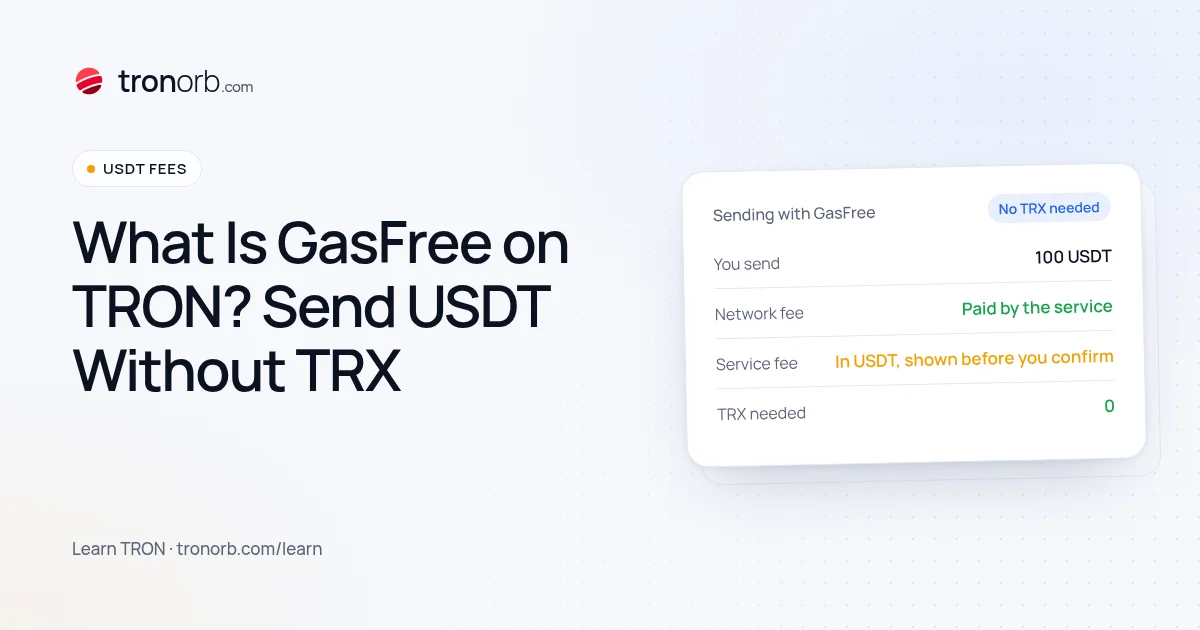
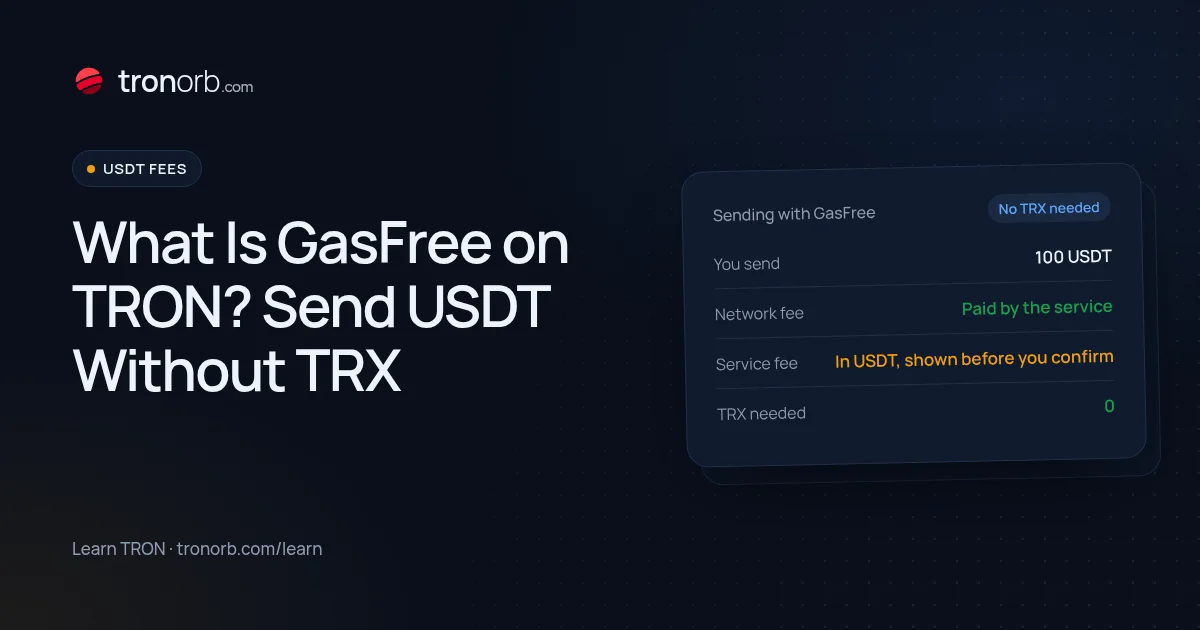
GasFree is a way to send USDT on TRON without holding TRX. Instead of paying the network fee in TRX, you pay a service fee in the token you're sending, and the service covers the energy and bandwidth. It solves the most common beginner problem on TRON — "I have USDT but can't send it" — at the price of a higher fee per transfer.
The problem it solves
Every USDT transfer needs energy and bandwidth, normally paid by burning TRX. An address that only holds USDT can't pay — see send USDT without TRX. GasFree moves that cost into USDT.
How it works in practice
- Your wallet supports GasFree (it's built into some TRON wallets).
- You send USDT as usual and choose the GasFree option.
- You sign the transfer; the GasFree service submits it on-chain and pays the network resources.
- Its fee is charged in USDT; your wallet shows the fee and the total before you confirm.
The exact fee is set by the service and shown in your wallet before you confirm. Your keys stay in your wallet — the service only relays a transfer you signed.
GasFree vs other ways to pay
| Method | You need | Cost per USDT transfer | Best for |
|---|---|---|---|
| Burn TRX | TRX on the address | Highest network cost | Rare transfers |
| Rent energy | A way to pay the provider | Low | Irregular transfers |
| Stake TRX | A lot of TRX, locked | No ongoing cost | Daily transfers |
| GasFree | Only USDT | Service fee in USDT | Zero-TRX addresses |
Compare exact numbers for your volume in the USDT fee calculator.
When it's a good idea
- An address that holds only USDT and no TRX.
- Occasional transfers where buying TRX first isn't worth it.
- Onboarding users who don't know what TRX or energy is.
- Payments from wallets you don't want to manage TRX on.
When it isn't
- Frequent transfers: staking TRX or renting energy is usually cheaper per transfer.
- Large volumes for a business: an energy API or staking is more predictable.
- Wallets without built-in support: don't use random websites that promise "gas-free" transfers.
Stay safe
GasFree is a wallet feature, not something a stranger "activates" for you.
- Never pay anyone to "unlock" or "activate" USDT.
- Never share your recovery phrase.
- If a site asks you to approve a token so it can "pay your fees", be very careful — approvals can let a contract spend your tokens. Check and revoke them with our token approvals tool.
Quick answers
Is GasFree free? No — the network fee is replaced by a service fee in USDT.
Does the recipient get less? That depends on the wallet; it shows the amount and fee before you confirm.
Can I use GasFree for TRX transfers? It's designed for tokens like USDT. TRX transfers mostly use free bandwidth anyway.
Related
More in Learn
- How to Convert TRX to USDT (and Back)Three ways to swap TRX to USDT TRC-20 — on an exchange, with a wallet’s built-in swap or a TRON DEX, or through an instant exchange service — what each costs, how slippage and energy work, and what to check before you swap.Read
- USDT TRC-20 vs ERC-20 vs BEP-20: What’s the Difference?USDT TRC-20, ERC-20 and BEP-20 are the same dollar on different blockchains. How they differ in fees, speed, address format and liquidity, which network to choose, and how not to mix them up.Read
- How to Get TRON Energy: 4 Ways ComparedFour ways to get TRON energy for USDT transfers — burn TRX, rent energy, stake TRX or have it delegated — with costs, trade-offs and which one fits how often you send.Read
- What Is TRON Energy Rental and How Does It Work?TRON energy rental explained: how providers delegate energy to your address with Stake 2.0, what you choose when you order, how to stay safe, and when renting beats staking or burning TRX.Read